
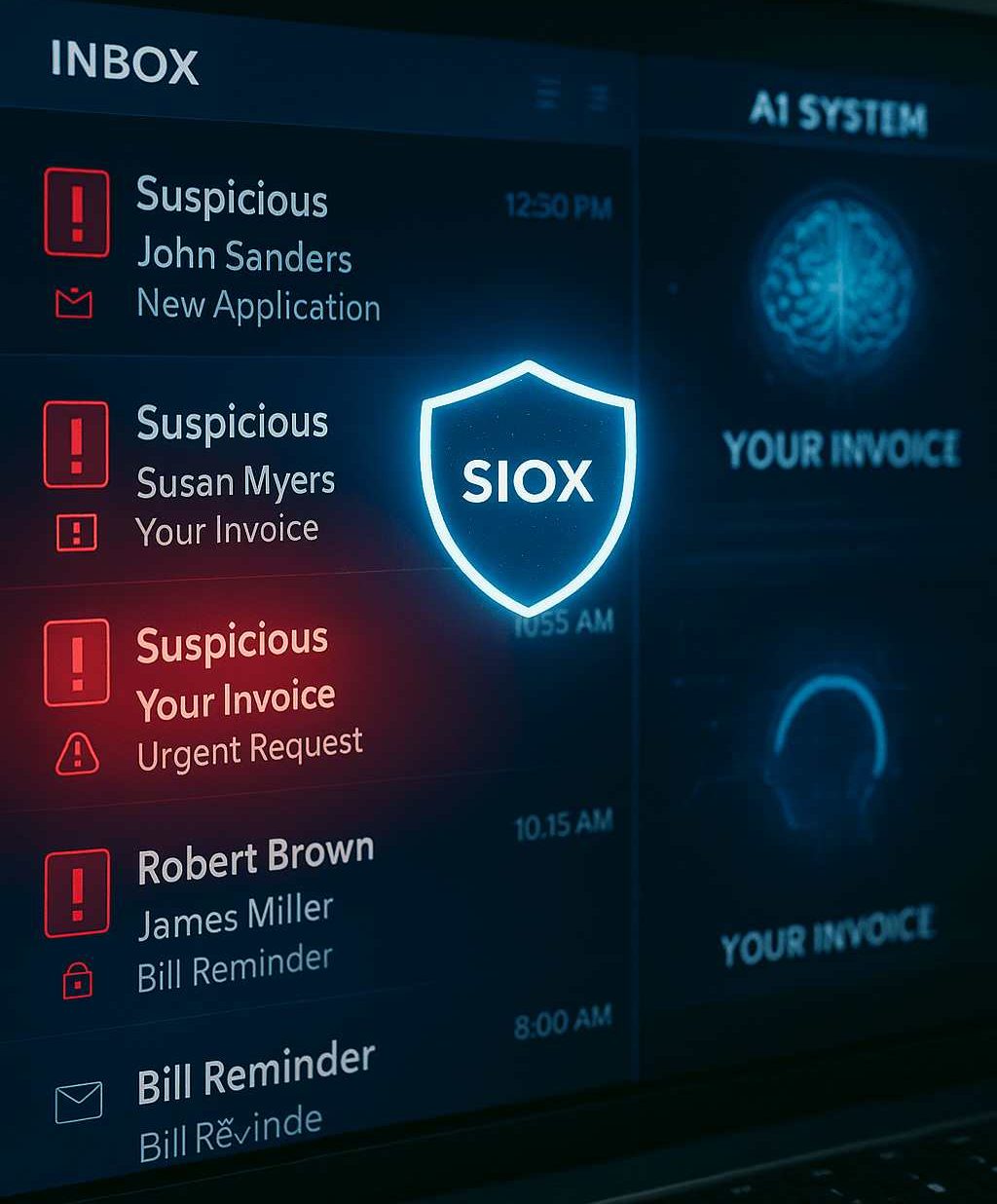

Email remains the lifeblood of business communication – and unfortunately, it’s still the most popular doorway for cyberattacks. Even in the era of AI chatbots and team collaboration apps, email is where work gets done: contracts are sent, invoices received, credentials exchanged. Cybercriminals know this, which is why they continue to target email more than any other channel. In 2025, the situation has grown even more urgent. Attackers are now using artificial intelligence to supercharge their email scams. With generative AI tools, scammers can quickly create convincing phishing emails in perfect language, personalize them at mass scale, and even remove traditional “red flags” that users used to watch for. The result? Phishing emails are harder to spot than ever, and even savvy employees might be fooled. In fact, an estimated 92% of malware infections still start with a simple email click, and business email compromise (BEC) scams – where a hacker impersonates a colleague or vendor via email – cost organizations billions in losses annually. The bottom line: despite all our new technologies, email security is more critical than ever.
AI-Powered Phishing: The New Threat Landscape
Not long ago, phishing emails were relatively easy to identify: broken English, sketchy graphics, outrageous stories about deposed princes. That’s no longer the case. Today’s phishing attacks are often indistinguishable from genuine emails. Attackers use AI to scan social media and company websites to pick up context about you and your contacts. They then craft messages that are highly personalized and on-topic – perhaps referencing a recent project or using a familiar tone – making the scam far more believable. AI can even generate professional-looking graphics, signatures, and email formatting that mimic your company’s style. Some cybercriminals go a step further, deploying AI-driven chatbots that can engage in back-and-forth email conversations, making them seem even more legitimate. And we can’t forget about deepfakes: an attacker might email you and then follow up with a phone call where an AI-generated voice of your CEO asks you to urgently transfer funds (yes, this has happened!). These multi-channel, AI-augmented attacks exploit the trust we have in what we see and hear. In short, AI has raised the stakes – even a cautious employee could be tricked by a well-crafted phishing email or impersonation. It’s crucial for businesses to recognize this shift and adapt their defenses accordingly.
Email: Still the Top Target
Why do hackers still bother with email, even as flashy new platforms emerge? The answer is simple: email works (for them). Virtually every organization relies on email, and every employee has an email account – it’s a ubiquitous attack surface. Unlike closed messaging systems, email can reach anyone and often comes with a false sense of legitimacy (if it’s in my inbox, it must be okay). Criminals exploit that trust. According to recent industry reports, email continues to be the entry point for the vast majority of cyber incidents. It’s not just phishing for passwords either. Sophisticated adversaries engage in Business Email Compromise (BEC), where they hijack or spoof an email thread and convince someone in accounting to pay a fraudulent invoice, for example. These BEC attacks have grown easier with AI, which helps scammers avoid grammar mistakes and even replicate writing styles. Small businesses are especially at risk because they might not have advanced email security systems or dedicated fraud teams. Yet, many SMBs also think newer tools like Slack or Teams have reduced their email usage – in reality, email volume often increases with company growth, and external communications (with clients, suppliers, etc.) almost always funnel through email. The takeaway: Email isn’t going away; if anything, it’s more ingrained in business workflows than ever. And as long as email is a primary tool, attackers will target it. So regardless of the buzz around AI, IoT, or other trends, securing your email channel remains absolutely vital for protecting your organization.
How to Bolster Your Email Security (Best Practices)
Given the heightened threats, every business – especially SMBs – should take a hard look at their email security measures and upgrade them for the “age of AI.” Below are some key email security practices to implement today to keep your communications (and money) safe:
- Use Advanced Email Security Gateways: Don’t rely on the default spam filter that comes with your email service. Consider deploying a modern, AI-powered email security gateway that can analyze incoming messages for subtle signs of phishing or fraud. These systems use machine learning to spot things like domain spoofing, unusual sender behaviors, or malicious attachments and links. By catching more threats at the door, you greatly reduce the chance of a dangerous email reaching an inbox.
- Train Your Team – Continuously: Regular training is a must. Phishing simulations (sending test phishing emails to employees) coupled with interactive training can dramatically improve your team’s ability to detect real attacks. Emphasize the new types of threats: emails that look internal but aren’t, or that use pressure tactics (“urgent response needed!”). Teach everyone to hover over links to check URLs, inspect sender addresses carefully, and to never send sensitive data or payments based on an email alone without verification. Make security training a frequent event (quarterly, for example) so knowledge stays fresh.
- Implement Email Authentication Protocols: Ensure your IT team has set up DMARC, SPF, and DKIM for your domain. These email authentication protocols help prevent attackers from spoofing your company’s email address. In other words, they make it much harder for someone to send an email that falsely claims to be from yourdomain.com. Properly configured, DMARC can tell receiving mail servers to reject any fake emails pretending to be from your company. This protects your employees, customers, and partners from a common phishing tactic.
- Enforce MFA and Strong Passwords for Email Accounts: Since credential theft is rampant, make sure every email account in your organization is protected by multi-factor authentication. This means even if an attacker somehow phishes an employee’s email password, they still can’t log in without that second factor (like a mobile app code or hardware token). This is a vital backstop for when – let’s face it – someone eventually falls for a phishing lure. Also consider business processes like wire transfers: require out-of-band verification (e.g. a phone call) for any transfer requests received by email, no matter who appears to have sent them. This kind of two-factor verification for transactions can foil even convincing BEC scams.
By layering these defenses, you create an email security posture that can withstand even the new AI-enhanced threats. Remember, technology alone isn’t enough – it must go hand-in-hand with user vigilance and good processes. Email security in the age of AI is all about combining smart tools with savvy people. With that combination, your organization can continue to rely on email for business communications without sleeping with one eye open. Stay cautious, stay informed, and you can stay secure.
